

Blog
Insights
Alex Remy on Creating Value in an Oversupplied Wine Market
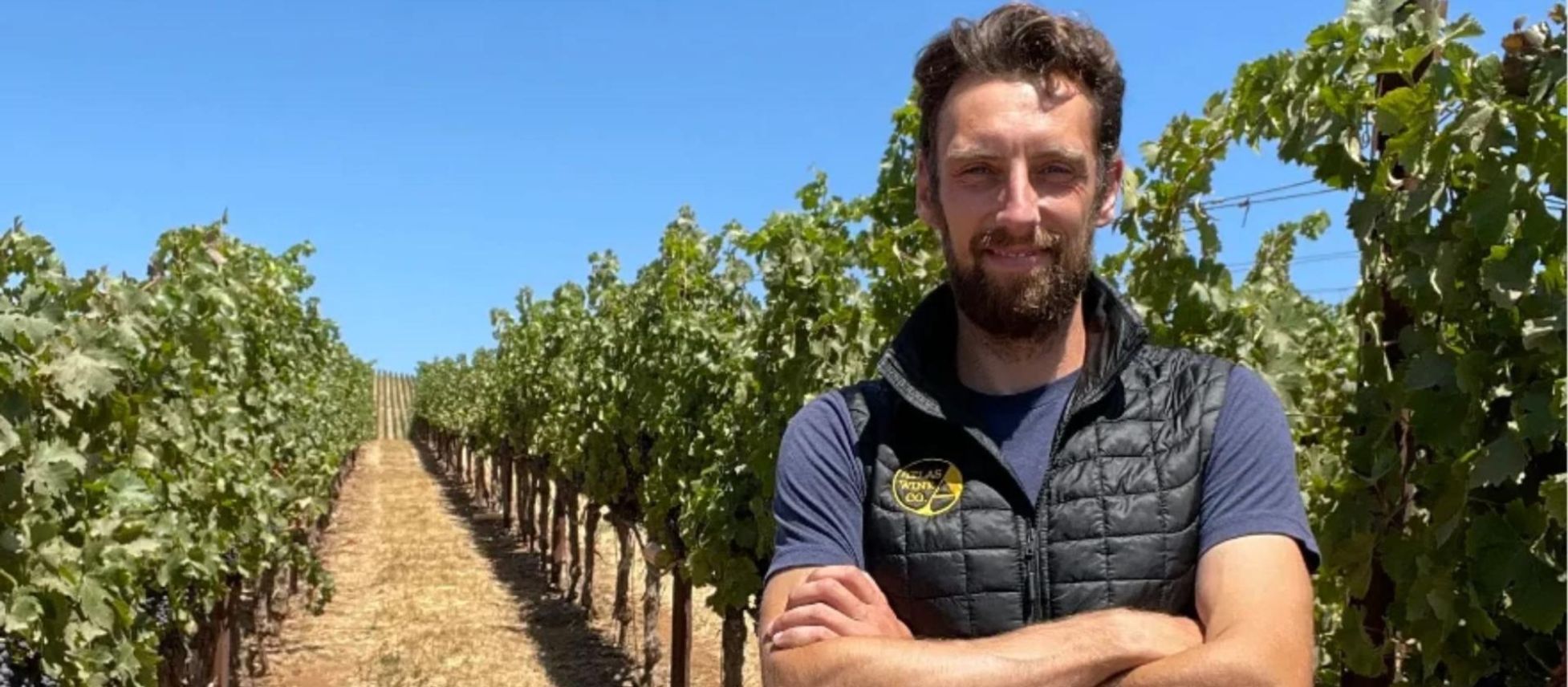
Alexandre “Alex” Remy discusses why commercial planning must begin before harvest—and how growers, wineries and buyers can work together to protect margins.
Wine oversupply raises questions that go beyond how much wine the industry produces. Are vineyards being farmed for a clearly defined market? Do production costs support the intended retail price? And who carries the risk when sales fall short?
In this interview with IBWSS, Alex Remy draws on his experience with Atlas Vineyard Management, Atlas Wine Co., Opal Moon Crush and Omen Wines to explore those questions. From vineyard economics and bulk sourcing to private-label partnerships and distributor relationships, he explains why connecting decisions across the supply chain is essential to creating lasting value.
1. When you look at today’s wine oversupply, how much is a volume problem, and how much is a mismatch between what the industry produces and what consumers and buyers want?
It is both, but I think the mismatch is the bigger structural problem.
The industry often farms vineyards, makes wine, and pushes that wine through the system without a clearly defined commercial destination. By the time it reaches the bulk market, most of the important decisions have already been made, and the costs are already embedded.
Then you get shocks in the bulk market. A winery needs cash or needs to free tank space, so wine gets heavily discounted. Suddenly the bulk market looks like the problem, when in reality the problem often began two or three years earlier in the vineyard.
The better model is to start with the consumer and buyer need and work backwards: What varietal? What appellation? What style? What retail price? What volume?
If we can control unnecessary costs and waste from the vineyard forward, there is an opportunity to give the consumer tremendous value without forcing the grower or winery to destroy margin at the end.
2. Starting in the vineyard, which decisions have the greatest impact on a wine’s commercial value? How should growers adjust when demand and grape pricing are uncertain?
The vineyard needs to be planted and farmed toward a commercial objective.
Varietal, clone, rootstock, yield, quality level, and farming program should all reflect the type of wine the market is ultimately asking for.
You need to farm to specifications.
If the intended wine needs to retail at $20, but the vineyard is structured and farmed to support a $60 bottle, you have already created a cost problem before harvest.
Likewise, if farming costs are $10,000 or $12,000 per acre and the vineyard produces four tons per acre into a market that only supports $1,500 or $2,000 per ton, the economics simply do not work.
Growers have to be willing to evaluate grafting, redevelopment, mothballing, yield strategy, and farming intensity. The goal should not always be to maximize quality regardless of cost. It should be to produce the right quality, at the right cost, for the right market.
That is a very different mindset.
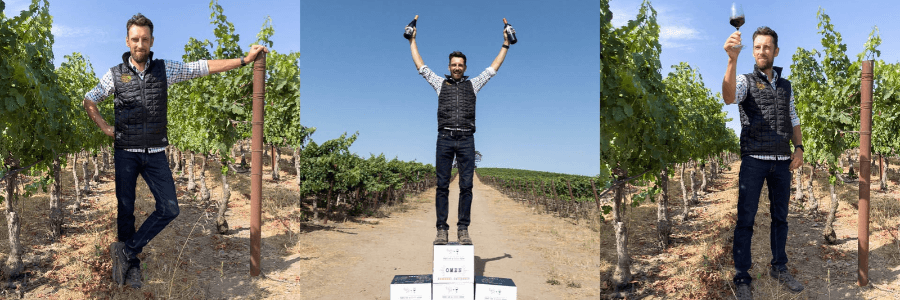
Image Source: Wine Enthusiast 40 Under 40 Tastemaker
3. How can growers, wineries and custom-crush partners work with buyers before harvest to agree on wine style, volume and price—and share inventory and market risk more fairly?
This is probably one of the biggest opportunities in the industry.
I have pitched private-label concepts to large retailers where we connect the program all the way back to a specific vineyard site. But today, that process is often shortcut through the négociant or bulk market because the vineyard, winery, sales team, distributor, and buyer are operating in separate systems.
Everyone is essentially passing the hot potato to the next person.
The grower produces fruit and transfers the risk to the winery. The winery makes wine and tries to move the risk to sales. Sales moves it to a distributor, and eventually everyone is hoping the consumer solves the problem.
That lack of coordination creates enormous swings in grape and bulk pricing.
A better model starts before harvest. The buyer, grower, and winery should agree on what they are trying to produce: wine style, Brix, alcohol, acidity, oak profile, appellation, volume, and target economics.
Then the vineyard can actually farm toward that specification, and the winery can make production decisions around a defined commercial goal.
Risk-sharing also needs to be genuine. If the grower carries the farming risk while the custom-crush facility earns its production margin regardless of the eventual wine price, incentives are not aligned.
The ideal structure is one where the grower, winery, and buyer all benefit when the finished product succeeds.
4. When evaluating grapes or bulk wine, how do you distinguish a genuine commercial opportunity from a low-priced product that will be difficult to sell? Which costs and assumptions are most often overlooked?
Cheap wine is not necessarily good value.
My first question is always: Who is the buyer, and what problem does this wine solve?
The bulk market can create the illusion of opportunity because wines sometimes become available at extremely low prices. But often that price simply reflects a seller that needs cash or needs to empty tanks.
The real economics include freight, storage, financing, blending, laboratory work, winemaking corrections, packaging, bottling, commissions, and the amount of time it will take to sell.
There is also a larger sustainability issue.
When the bulk market is distressed, it may suddenly be possible to put a Napa Valley Cabernet on the shelf at $19.99 or a Willamette Valley Pinot Noir at $9.99. That can look like tremendous value.
But what happens when the market turns, and bulk prices normalize?
If the SKU cannot support normal grape and wine economics, the program is not sustainable. The supplier then has to find cheaper wine, lower the quality or start “playing chemist” with blending and adjustments just to maintain the price point.
Ultimately, the consumer gets a less consistent product.
Every appellation has a relationship between price, quality, and value. Maintaining the reputation of an AVA requires some coordination throughout the pipeline—not simply buying whatever wine happens to be cheapest that year.
5. How do you work backwards from a buyer’s target retail price to build a viable sourcing, winemaking, packaging, and distribution plan while protecting margins?
I start at the shelf and work backwards.
If the target retail is $14.99, $19.99, or $24.99, you can calculate the retailer and distributor economics, supplier FOB, packaging cost, bottling cost, winemaking cost, and ultimately what you can afford to pay for grapes or bulk wine.
From there you determine which vineyard, appellation, and production model actually make sense.
That discipline should start in the vineyard, not in the bottling room.
If you know what the buyer wants before the season starts, you can farm appropriately, manage inputs, establish yield targets and make a wine specifically for that program.
That is where tremendous consumer value can be created.
When you do the opposite—farm first, produce second, and sell third—you often end up with an expensive wine trying to force itself into a price point it was never designed to support.
6. When a winery has excess inventory, how should it decide whether to hold, discount, sell in bulk, or develop a private-label partnership?
First, understand why the excess inventory exists.
Sometimes it is timing. Sometimes market demand changes unexpectedly. But frequently the wine was produced without enough connection to a realistic sales forecast.
Holding wine is not free. You have storage, financing, quality risk, and the possibility that another vintage arrives before the previous one has sold.
Discounting branded wine can create a different problem by damaging price integrity and existing distributor relationships.
Bulk can be the cleanest option when the wine no longer has a strategic role, particularly when the objective is to free tank space or working capital.
Private label can potentially create more value if there is a buyer with a defined need and enough volume to establish a repeat program.
But the bigger lesson is upstream: the best way to deal with excess inventory is to create less of it in the first place.
Production needs to be much more closely connected to realistic demand.
7. What makes a private-label or buyer-specific wine program commercially sustainable for both supplier and buyer? What should be agreed upfront around volumes, pricing, and repeat orders?
The best programs are designed together from the beginning.
The supplier and buyer should agree on the target consumer, retail price, wine style, appellation, packaging, annual volume, and quality specifications before production begins.
Once you know those parameters, you can source or farm specifically for the program rather than trying to retrofit excess inventory afterward.
Volume commitments are particularly important.
If a supplier produces 20,000 cases based on an informal forecast and the buyer eventually purchases only 5,000, almost all of the inventory risk remains with the supplier.
I prefer programs that start with realistic commitments, prove velocity, and then scale.
A sustainable private-label relationship should create value on both sides. The buyer gets differentiation, margin, and a product designed for its consumer. The supplier gets predictable volume and a return that justifies continuing the program.
If one side only wins because the other side absorbs all the risk, eventually the relationship breaks.
8. Beyond producing good wine, what can a custom-crush operator do to help clients succeed commercially? How do you connect production decisions with their brand strategy and sales plan?
A custom-crush operator should understand what the client is trying to sell, not simply what they are trying to make.
That means asking about distribution, target retail price, expected annual volume, inventory position, and sales strategy before the production plan is finalized.
There is no reason to bottle 10,000 cases simply because the wine is technically ready if the client only has demand for 2,000 cases.
Likewise, if the market requires a particular wine style or cost structure, the winery should help the client make those decisions early enough for them to matter.
At Opal Moon Crush, this is an area we increasingly focus on: connecting production decisions with commercial reality.
A winery can add tremendous value by helping clients manage bottling cadence, finished-goods inventory, cash flow and production planning.
The vineyard, cellar and sales plan should not operate as three separate businesses.
9. Drawing on your experience with Atlas Vineyard Management, Atlas Wine Co., Opal Moon Crush and Omen Wines, can you share an example of building a successful route to market? How can existing distributor relationships support additional brands, and what are their limits?
Omen is a good example of how the different parts of the wine business can connect.
Through Atlas Vineyard Management, we understand vineyards, farming costs, and grape production. Through Opal Moon Crush, we understand winemaking and production. Through Atlas Wine Co. and Omen, we have spent years building distributor relationships and understanding how wine actually moves through the three-tier system.
The value is not simply having access to vineyards, a winery, or distributors independently. It is having visibility across the entire chain.
If we understand what the market is asking for, we can potentially identify the right vineyard, farm it appropriately, produce toward a defined style and cost, and connect the finished product with a route to market.
That infrastructure can also help additional brands, and we have begun exploring that model.
But there are limits.
A distributor relationship is not automatically transferable. A new brand still has to make sense for the distributor, the sales team, the price point and the market.
Relationships can open doors. They cannot make an unsustainable product commercially viable.
10. For growers, wineries and buyers planning for 2027, what are the three most practical steps they can take now to create value and protect margins in an oversupplied wine industry?
First, define the destination before producing the wine.
Know the intended buyer, target retail price, wine style, and expected volume before harvest whenever possible.
Second, farm and produce to those specifications.
The vineyard, winemaking, and packaging decisions should all support the intended market. Every unnecessary input or production decision becomes a cost that somebody eventually has to absorb.
Third, align incentives across the supply chain.
Growers, wineries, custom-crush facilities, distributors, and buyers need to share information earlier and develop structures where everyone participates in the success of the finished product.
To me, the biggest opportunity in the wine industry today is eliminating waste between the vineyard and the consumer.
We have spent years optimizing individual pieces of the supply chain. Now we need to optimize the entire chain.
If we reduce the number of decisions made without a clear commercial objective, we can deliver significantly better value to consumers while still protecting margins for growers, wineries and buyers.
About Alex Remy
Alex Remy is a French-born viticulturist and oenologist with more than two decades of international experience across France, New Zealand, Australia, Tasmania and the United States. His work spans vineyard strategy, winemaking, sensory analysis, product development and commercial execution.
Before launching his independent practice, Alex served as Chief Marketing Officer within the Atlas ecosystem, helping shape brand strategy, innovation and market alignment across Atlas Vineyard Management, Atlas Wine Co. and Opal Moon Crush. His work included initiatives such as Opal Moon Crush and the Bulk Specs Program, connecting vineyard metrics, winemaking goals, and bulk wine opportunities.
Earlier in his career, he advised producers including Kendall-Jackson, Diageo, Opus One, Mumm, Chandon, Gallo, Constellation Brands and Concha y Toro on maturity assessment, sensory evaluation, fermentation strategy, aging programs and research and development.
Today, through Alex Remy, he works independently with wineries, growers, investors, entrepreneurs and operators on wine programs from vineyard to market, bulk wine and private-label strategy, strategic partnerships and business development. His approach centers on aligning technical decisions with commercial goals.
In 2021, Wine Enthusiast named him one of its 40 Under 40 Tastemakers for his work in wine accessibility, education and innovation. Outside wine, Alex is an endurance athlete whose experience in Ironman and ultra-distance trail racing informs his approach to resilience, leadership and long-term performance.
Also Read:
How Private-Label Wine Business Is Really Built: Michael Salzer of Trinchero Family Estates
Barrel Reduction Strategies: How Wineries Are Using Alternative Oak to Improve Their Economics
Exploring How Private Label Wines Are Reshaping the Hospitality Menu, Through Cami Lehmann’s Lens
If you're a bulk wine or bulk spirits supplier, contract bottler, or private label producer aiming to connect with serious trade buyers, IBWSS San Francisco is the event you can't afford to miss. Get a quotation or book an exhibitor table.